We show up, do the work and do it right
Your pool, handled
Weekly service. Honest repairs. Reliable communication. Pool Captains takes the work off your plate so your pool is always ready — for family, for guests, for whatever comes next.
- Most spas on Destin, 30A, and Santa Rosa Beach homes are attached to the pool -- they share the same water, pump, filter, and heater, and valves switch the system between pool mode and spa mode.
- Hot water in a small space burns through sanitizer faster, pushes pH and scale around, and collects lotion film and sand at the waterline, so the spa gets brushed, skimmed, vacuumed, and tested on the same stop as the pool.
- Cooler October and November nights are when the spa gets used and the heater gets tested. Catch a heater, valve, or spillover problem before a holiday weekend, not the night guests arrive.
By mid-October on the Emerald Coast, the pool is still warm enough for an afternoon swim, but the evenings cool off. That is when the spa goes from decoration to the busiest part of the backyard. Fall break families, Thanksgiving guests, and owners up for a long weekend all want the same thing: hot water, working jets, and a spa that looks as clean as the pool next to it. Here is what attached spa care actually involves on Destin, 30A, and Santa Rosa Beach pools, and what our techs check on a routine stop.
How an attached spa works with your pool
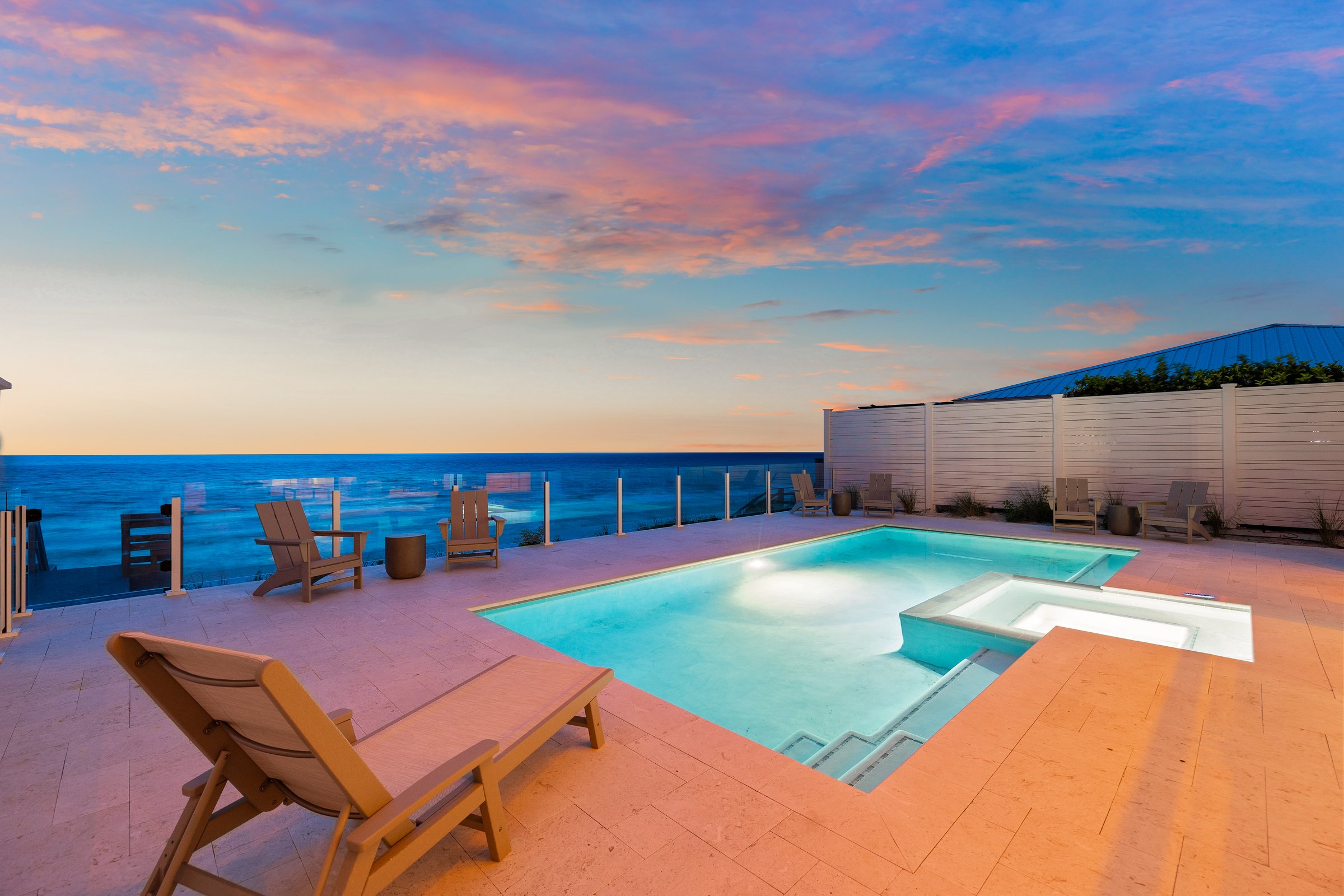
Most Emerald Coast backyards have a spillover spa: a raised spa built into the pool, with water that spills over a ledge into the main pool. It is not a separate hot tub. On most setups the spa and pool share one pump, one filter, one heater, and one set of chemistry. Valves on the equipment pad -- usually turned by automation -- decide whether water runs through the pool, the spa, or both.
That shared plumbing is why the spa does not need its own separate route. It also means a spa problem is often a pool-system problem. A spa that will not heat, will not fill, or stops spilling over usually traces back to the pad: a valve that did not turn, low flow from a packed basket or dirty filter, or a heater that will not fire.
Spa chemistry: small water, fast swings
A spa holds a small fraction of the water in the pool. When it runs on its own in spa mode, a few people in hot water put a big load on a small volume. Sanitizer gets used up faster, pH moves, and hot water makes calcium scale more likely to form on tile and the spillover edge. Body oils, sunscreen, and lotion leave a film at the waterline and can make the water look dull or foamy after a busy weekend.
On every routine stop, our techs test the water first -- free chlorine, pH, total alkalinity, calcium hardness, and cyanuric acid, plus salt on saltwater pools -- and add chemicals as needed. On shared-water spas, that reading covers the spa too, but the tech still looks at the spa itself for film, cloudiness, or scale. If you run a saltwater system, the salt cell is making chlorine for the spa as well; our saltwater pool care guide covers how cell output and scale play into that.
The spa on a routine service stop
The spa gets worked inside the same service-stop checklist as the pool, not as an afterthought:
- Blow off the pool deck -- sand and leaves off the deck and spa coping so they do not end up on the spa benches.
- Get toys out of the pool -- floats and toys out of the pool and spa so cleaning can finish clean.
- Check pool chemistry -- readings first, then chemicals as needed for the shared water.
- Empty skimmer and pump baskets -- packed baskets cut flow, and low flow is a common reason a spa will not heat or spill over properly.
- Inspect equipment -- pump, filter, heater, and valves on the pad get a look for leaks, noise, and anything off.
- Clean pool tile (as needed) -- spa waterline film and scale on the spillover edge.
- Skim, vacuum, and brush -- spa benches, floor, and walls collect sand and film just like the pool.
- Verify all equipment is out of service mode -- so filtration schedules, spillover, and any spa heat settings run the way the home expects after we leave.
- Take a photo of the cleaned pool and secure the gate -- the after shot leads your service report, and access is closed when we leave.
For the full checklist in the order techs work it, see What Happens on a Weekly Emerald Coast Pool Service Visit.
Spa heaters and cooler Emerald Coast nights
The first cool weekend of fall is when a lot of owners find out the heater has a problem. A heater that will not light, cycles on and off, or never reaches set temperature is a repair visit, not a chemistry fix. Sometimes the heater itself has failed. Sometimes low flow from a dirty filter, a packed basket, or a valve that did not turn is keeping it from firing.
Heater type also changes expectations. Gas heaters bring a spa up to temperature faster. Heat pumps are efficient but slower, and they lose ground on colder nights. Either way, a spa does not go from cool to hot in a few minutes, so plan ahead for guest arrivals instead of turning it on when the car pulls in. Our Emerald Coast pool repairs guide walks through how heater diagnosis, repair, and replacement are handled in-house.
Spillover, jets, and spa mode
A spillover that stops spilling, jets that feel weak, or a spa that drains down into the pool when it should be full all point to flow or valve position. On many shared-equipment setups, the pool is not filtering the same way while the system sits in spa mode. If guests or family leave the spa running on heat for hours, you are paying to heat water and may be shortchanging the pool side of the system. A quick look at the automation settings after a busy weekend saves both.
Rentals and second homes with spas
For vacation rentals, the spa is often the thing guests notice first in fall and winter listings. Decide ahead of time whether guests can run spa heat on their own, and make sure your property manager knows how warm-up time works on your heater. Mid-October is still in the twice-weekly window many homes run March through October before dropping to weekly November through February, and the spa stays on the stop either way. Standing weekly pool service keeps the water, spa, and equipment on a schedule, and Guest Ready Care adds more frequent checks plus deck and furniture presentation around guest turns. Owners who are not on site every week can find seasonal cadence details in Emerald Coast Second-Home Pool Care, and the rest of the cool-season routine is in Emerald Coast Fall and Winter Pool Care.
FAQ
Does an attached spa need separate service from the pool?
No. A spillover spa shares water and equipment with the pool, so it is brushed, skimmed, vacuumed, and covered by the same chemistry readings on the routine stop. The tech still checks the spa itself for film, scale, and cloudiness.
Why does my spa look cloudy or foamy after a weekend?
Hot water and several people in a small volume use up sanitizer fast, and lotion and body oils leave film. Testing the water first shows what needs correcting. If it keeps happening, our guide to common Emerald Coast pool problems covers the usual causes.
How long does it take to heat a spa on the Emerald Coast?
It depends on the heater, the spa size, and the air temperature. Gas heaters are faster; heat pumps are slower and lose ground on cold nights. Plan ahead for guests instead of turning the heat on at arrival.
When should I call before the next visit?
A heater that will not fire, a spa that will not switch modes or stay full, a spillover that stops, or water at the equipment pad -- call 850.600.4256.
Contact us or call 850.600.4256 to keep your pool and spa ready for cooler nights across Destin, 30A, and Santa Rosa Beach.